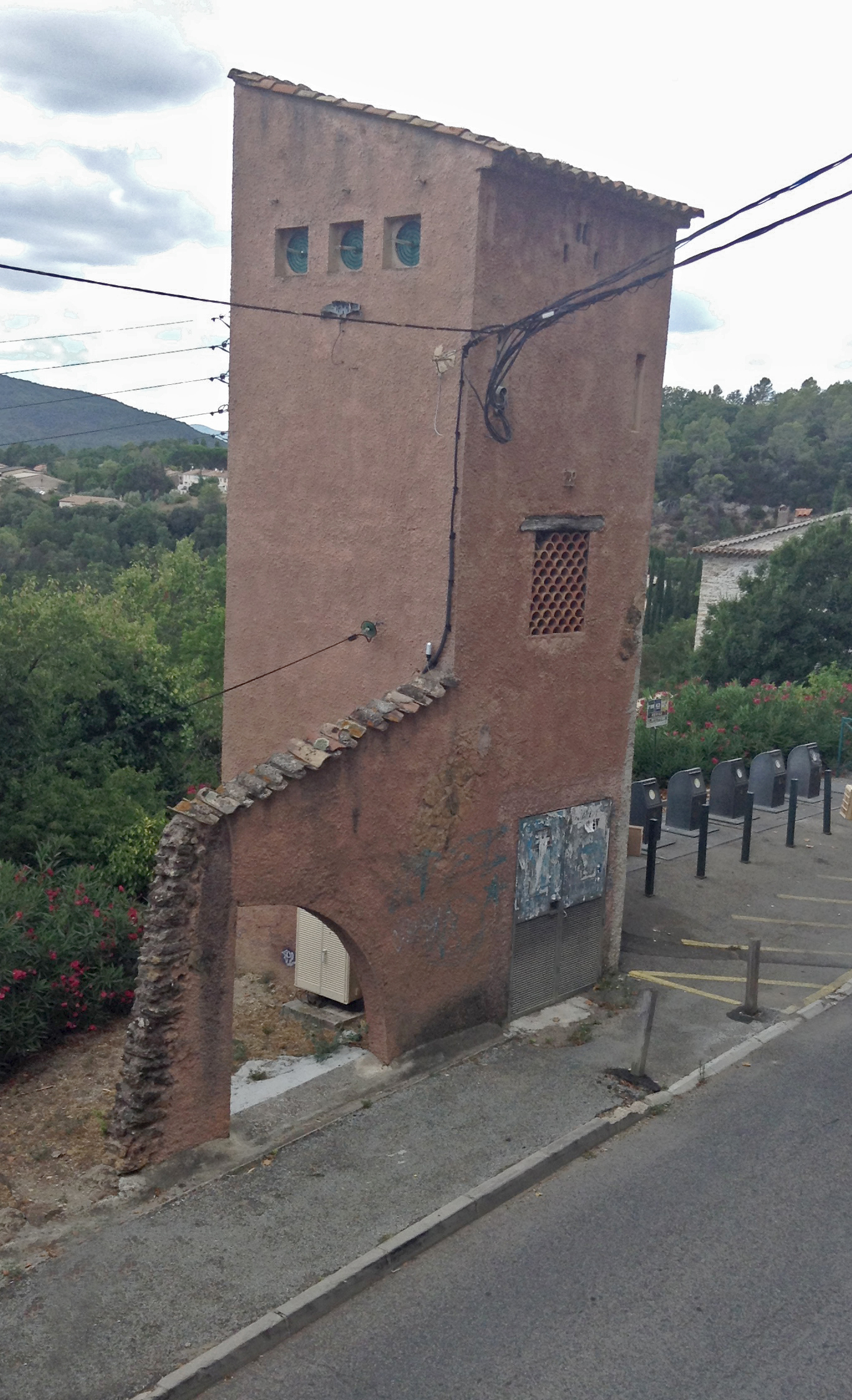
After the construction of this small power transformer building on the outskirts of Bagnols-en-Foret (Var, France) there were some bricks and tiles left over. This probably made the construction workers decide to go on a little more, this time improvising, without construction drawings, as a kind of constructional jam session after work. The result was a sloping piece of wall next to the house, covered with tiles, containing an asymmetrical gate. Continue reading
Hear no evil, see no evil…
This week, hundreds of prominent scientists, including Stephen Hawking, published an open letter warning against the use of autonomous weapons, such as military drones that can select and attack a target without human control. It is the well-known specter of the invention turning against its inventor, of technology ultimately taking over the human race. It is clear that this is no longer fiction. In numerous fields, technological and economic, humanity is being dominated by its own inventions. Also in spatial planning. Have we become enslaved to our ever growing need for more infrastructure? Continue reading
Skaeve Huse: Can dwelling be learned?
The city of Rotterdam is putting up 11 so-called “Skaeve Huse”. Skaeve Huse is crooked Danish for “crooked houses”. These are container homes for maladjusted people who in recent years have misbehaved in such a way that they no longer qualify for a regular apartment in Rotterdam housing associations. The choice is: either move to another town or to the Skaeve Huse where, under supervision and at a safe distance from civilization, they will be prepared for a return to a “normal” home. Can dwelling be learned? Continue reading
Urban Heat Islands and the Origin of the Apartment Building.
Interesting reseach was done recently at the University of Wageningen, about the occurring of so-called heat islands in cities during the summer. On hot days certain places in the city can become up to 8 degrees hotter than the temperature in the countryside. This is due to the presence of much stone surfaces and little green in the city. Houses and buildings warm up during the day and capture the heat in the streets. During the night the stored heat is then radiated back. The higher the density in the city, the greater this effect becomes. Up to a certain extent at least, because the research also shows that the higher the buildings and the narrower the streets are, the smaller the heat island effect in summer.
Manhattan of the Desert
In the construction of Shibam, an ancient town in Yemen, also known as the “Manhattan of the Desert”, one apparently was already aware of this. The houses here, in fact apartment towers, are built out of clay, up to 11 storeys high. Continue reading
The escalator: a short history
How did a fairground attraction become an important tool of urban renewal?
The first escalator was installed in 1897 at Coney Island, New York, as a fairground attraction. It’s inventor, Charles Seeberger worked at elevator manufacturer Otis, thet produced the first commercial escalator for the World Expo of 1900 in Paris. The first escalator In the Netherlands appeared in 1926, in the new building of the department store De Bijenkorf in The Hague. It was a real sensation, initially still seen more as an attraction rather than as means of transport. For months, here were long lines in the store, with people waiting to take a ride on the escalator. Continue reading
Revelation through Concealment
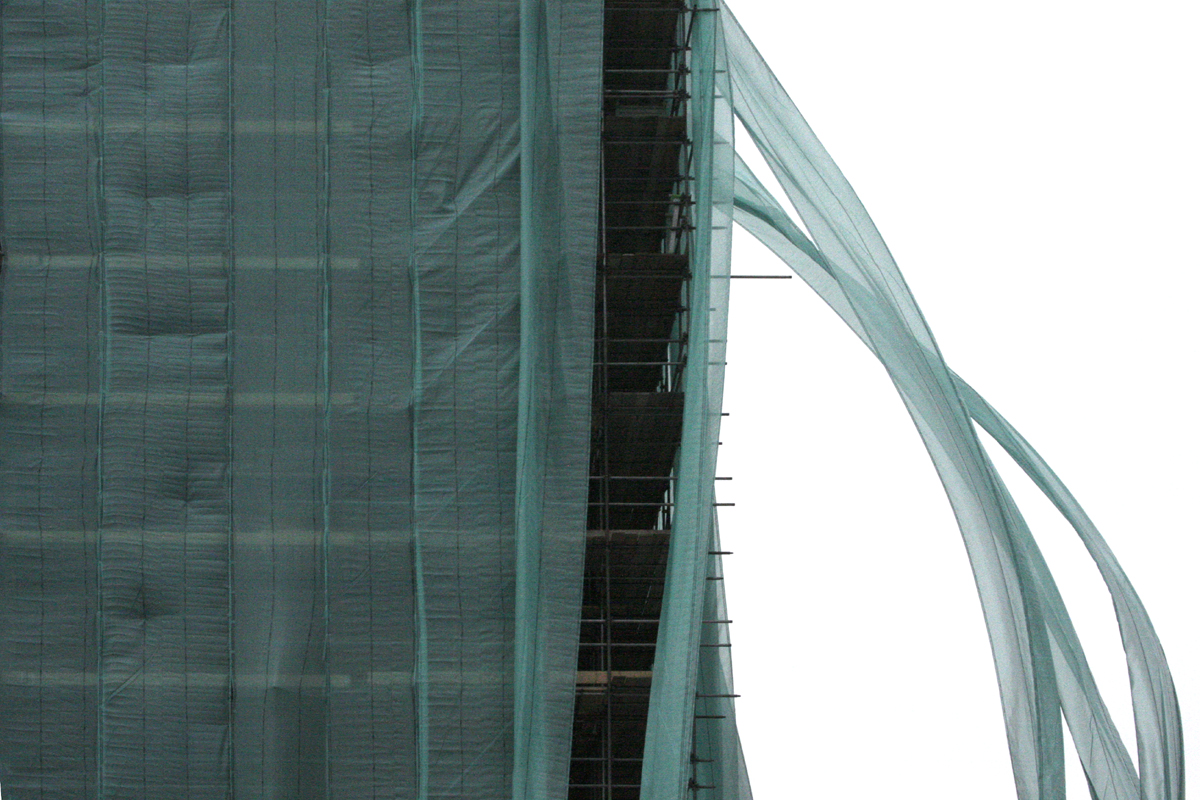
In phases of transition, such as renovation or (partial) demolition, buildings sometimes show themselves in a new and unexpected way. By removing layers of the facade buildings often gain a more interesting appearance, a stronger expressiveness. When a building is halfway demolished, you often get a kind of reversal, if it were pulled inside out. The underlying structure becomes visible, inner walls become facades. Continue reading
Concentric Planning vs. Blitzkrieg

Street scenes inside and outside of the historical center, just 200 meters apart. Amersfoort, The Netherlands. Photos: RM
It is 75 years ago this week that the city of Rotterdam was stripped of its center by German bombs. In general, the absence of an old center is seen as a deficiency; In contrast, it can also be said that it provides certain advantages, especially in the field of urban planning. Continue reading
Bee Hotels
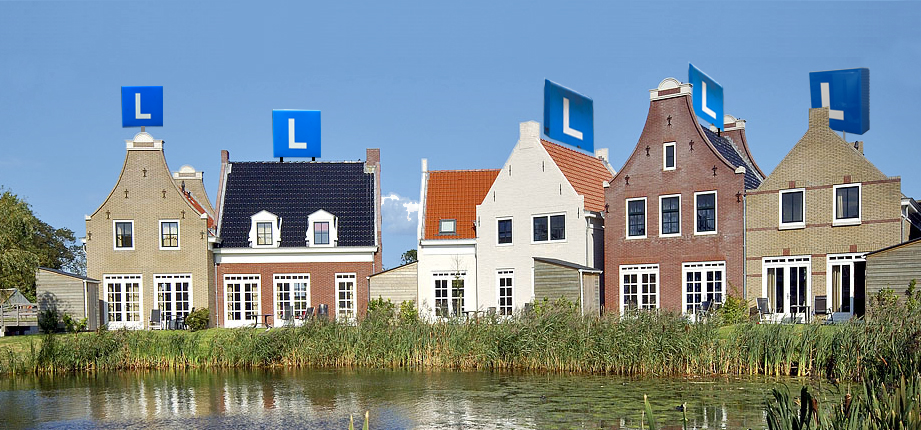
The parallels between wildlife and the human world are numerous. Since humans find it necessary to help certain species with their housing by making nest boxes and the like, animals have to deal with all the problems that also occur in the human real estate market. Continue reading
The New Forbidden City
The Forbidden City was built in the 15th century, after the capital of the Chinese empire was moved from Nanjing (literally translated: “southern capital”) to Beijing (the “Northern Capital”). It was the place from which the Chinese emperors of the Ming and the Qing Dynasties ruled over China. Hidden behind 10 high meter walls, hermetically closed for the people of China, who could only imagine what took place inside these walls. Only in 1925, after the fall of the monarchy and the departure of the last emperor, the Forbidden City was first opened to the public. Continue reading
City versus Nature
Mankind can roughly be divided into two: city people and nature lovers. Granted that there exists a potential overlap between the two groups, most people still have a clear preference for either the city or the countryside. Nevertheless, it is rare for an urban area to be situated directly next to real nature. Continue reading